
PCP and Libeara Collaborate to Explore Means to Enable Custody-Native Credit Against Tokenized Real-World Assets
The collaboration looks towards making products tokenized by Libeara, such as funds, available on PCP's credit orchestration infrastructure — allowing borrowers to earn yield on locked collateral while maintaining liquidity.
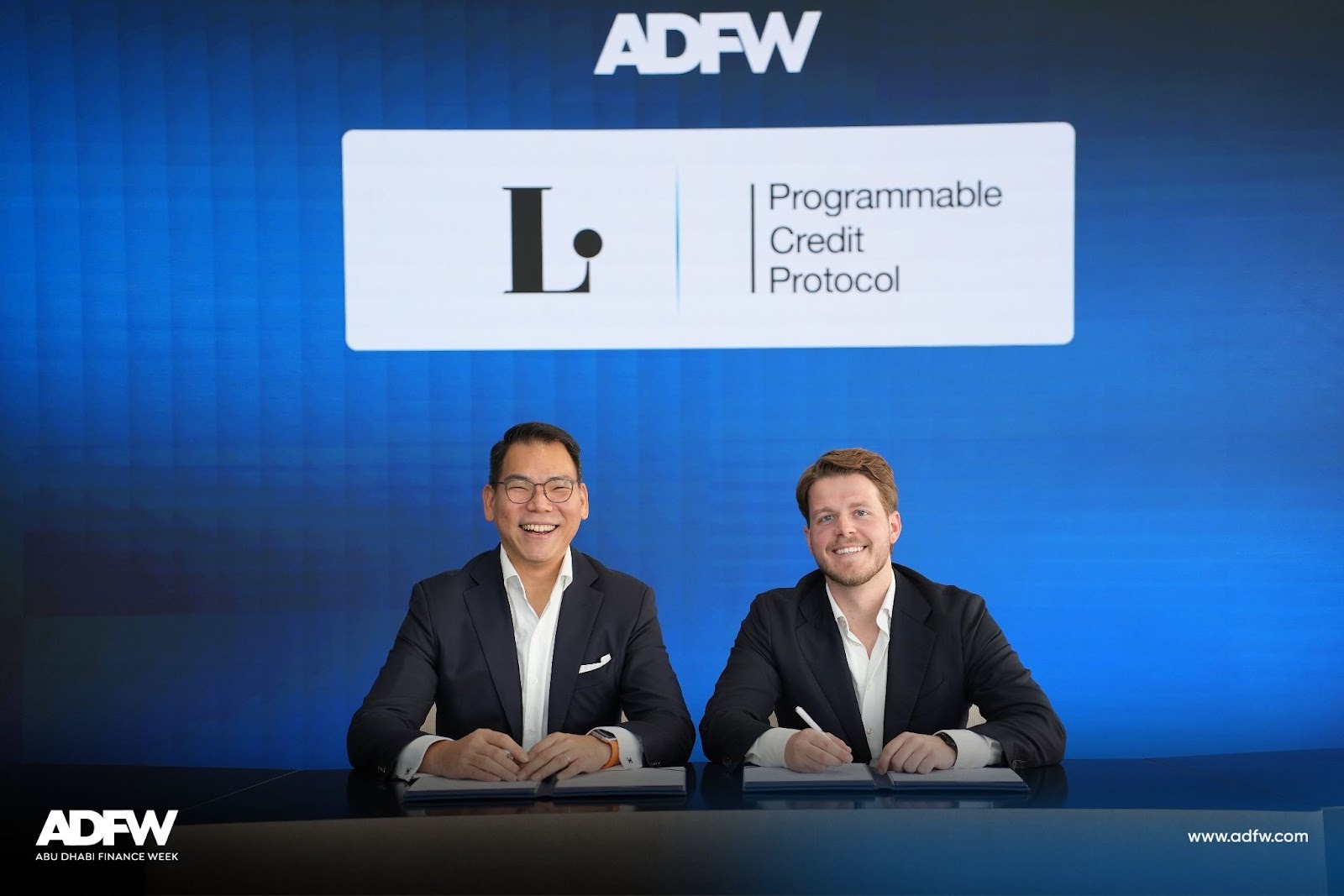
Aaron Gwak (left) CEO at Libeara & Rico van der Veen (right), CEO at PCP
12 March, 2026, Abu Dhabi, UAE: PCP (Programmable Credit Protocol), the custody-native credit infrastructure that enables digital asset custodians and Custody-as-a-Service (CaaS) integrated banks to deliver secured lending to their clients, and Libeara, the Standard Chartered-backed tokenization platform, today announced their intent to explore means of allowing Libeara's suite of tokenized real-world assets to be used as eligible collateral for institutional credit with PCP.
The parties’ intent to collaborate was crystallized during Abu Dhabi Finance Week 2025.
Through the collaboration, parties intend to explore how tokenized assets issued through Libeara's tokenization platform — including tokenized money market funds and a gold-linked secured private credit fund — can be integrated into PCP's collateral eligibility framework. This would enable clients of digital asset custodians and CaaS-enabled banks to borrow against Libeara-tokenized assets through PCP's Lock-in-Place credit model, where collateral remains with the borrower's custodian and continues to accrue yield throughout the life of the loan.
Rico van der Veen, CEO at PCP said, "Tokenized real-world assets are the most natural collateral class for custody-native credit. Libeara has built the institutional-grade tokenization infrastructure that makes this possible — regulated funds, transparent NAV, daily yield accrual. By integrating their assets into PCP's collateral framework, we're giving custodians and banks the collateral depth they need to offer competitive credit products to their clients. Abu Dhabi Finance Week was the right venue to formalize this — the region is leading in connecting traditional finance with digital asset infrastructure."
Aaron Gwak, CEO at Libeara said, "We built Libeara to make tokenized assets useful — not just purchase-able. Our exploratory steps with PCP on facilitating the use of tokenized assets as eligible collateral within PCP enabled client environments would be a significant step toward that vision. Investors should be able to earn yield on their holdings and access liquidity simultaneously, without transferring assets to a third party. PCP's custody-native model is structured to make that possible."
Yield-Bearing Collateral That Offsets Borrowing Costs
Unlike traditional lending arrangements where pledged collateral sits idle & coupon payments are not continuous, the funds tokenized by Libeara are structured to provide yield by accruing returns on their underlying assets. If used as collateral in custody with PCP, this yield would continue to accrue to the borrower — directly offsetting the cost of borrowing.
For a borrower pledging a tokenized T-bill fund yielding 4–5% against a loan at 5.5%, the net cost of carry falls to approximately 0.5–1.5% — making PCP-facilitated credit structurally more capital-efficient than conventional repurchase agreements or margin lending.
Collateral Stays Where It Is
PCP's Lock-in-Place model would mean Libeara assets, if used as collateral within the PCP infrastructure, would never be transferred to a third party, never pooled, and never rehypothecated. The borrower's custodian would be able to enforce the lock programmatically through PCP's custody policy engine. If a margin call or liquidation event occurs, the custodian acts on deterministic instructions — not discretionary decisions.
PCP’s custody-native approach eliminates the counterparty risk inherent in traditional collateral transfer models and aligns with the regulatory expectations of institutional participants operating under MAS, FCA, MiCA, and ADGM frameworks.
Enabling Banks and Custodians to Lend
PCP is designed to sit within existing custody infrastructure — whether with a standalone digital asset custodian or a bank operating through a CaaS provider. The protocol gives these institutions the tooling to offer secured credit to their own clients, using tokenized assets already held in custody as collateral. The bank or custodian remains the lender. PCP provides the programmable credit lifecycle — collateral eligibility, margining, liquidation triggers, credit receipts, and maturity — without requiring the institution to build it from scratch.
If Libeara's asset suite is integrated, this would expand the range of eligible collateral available to these lending institutions, giving their clients access to credit against regulated, yield-bearing tokenized funds alongside native digital assets.
-ENDS-
About PCP
PCP (Programmable Credit Protocol) is credit messaging infrastructure for tokenized assets. It enables banks and custodians to offer secured lending directly from custody — without moving collateral, building custom credit systems, or adding intermediaries. Collateral stays locked in the borrower's wallet, with margining, liquidation, and lifecycle management handled programmatically. PCP is developed by SemiLiquid Tech Labs LTD.
In December 2025, SemiLiquid did a pilot with participation from Franklin Templeton, CMS, and Avalanche. To access the full report and learn more, please visit: https://pcp.co/
About Libeara
Libeara is rebuilding capital markets on-chain through its compliance-first approach to the tokenisation of real-world assets. The company is backed by the innovation arm of Standard Chartered, SC Ventures, whose mission is to rewire the DNA of banking. To date, Libeara’s infrastructure has supported the tokenisation of more than US$1 billion in regulated assets – including a top-rated tokenised U.S. Treasury fund and Asia’s first tokenised retail money market fund. With multi-chain interoperability and institutional-grade security and governance, Libeara is scaling access to real-world assets the right way – transparent, regulated, and on-chain.
Disclaimer: PCP is not a lender, custodian, or financial intermediary. PCP does not hold, control, or have access to client assets. All lending relationships are between the participating bank or custodian and their clients. PCP provides the technology infrastructure only.


This website is intended for the user's own use in reviewing information available here about PCP, SemiLiquid and any of its affiliates . By accessing this website, you agree to be bound by the terms and conditions that appear herein. These terms and conditions are subject to change. PCP reserves the right to modify these terms and conditions, which it may do by posting changes to the website. If you do not agree with these terms and conditions, please do not access the website.